Buddy Bag was packed with more than usual and had to have his sister bag, Betty, on call also as they were heading to Deer Valley with changes in weather a guarantee. It is my annual trip to "Gramma's Camp," which was called "Women's Physical Fitness Camp" thirty years ago. Now that the women are at least thirty years older, they pack their knitting needles and crochet hooks, their bestseller books to read, and warmer clothing to wear. In place of hiking boots, sailing outfits, and shorts to wear are fuzzy pajamas and sweat pants several sizes larger than what was worn some years ago.
Deer Valley is a place not like any other in the world attended by women unlike any others in the world. These are women who are leaders, poets, and mothers to leaders and poets as well. We have laughed, cried, and shared our lives with each other for many years and look forward to getting together the last week in September every year.
The changing of leaves are always more vivid at Mount Davis, the highest point in Pennsylvania, with two beautiful lakes to reflect the images. The Amish farms are pristine and beautiful as well. Although we are not to photograph these private people in their horse drawn carriages or walking barefoot on their way home from school, I turn the car around for a second and third look. They have such a peace about their faces, and their simple life—without all the technology of cell phones, computers, and iPods—makes me think whether we need these things in our lives also. Another great advantage of Deer Valley is there is no cell phone reception and no computer hookups so there are no interruptions in our sharing, meditations, or exercise classes.
I have lost track of how many years I have attended "Women's Week," which is the new politically correct name for it. When I walked into dinner last Sunday, I spotted my favorite Deer Valley sweatshirt, "You Look Marvelous," Fifi the French Skunk shirt, on a fellow camper. When I asked her how long she has had it, she volunteered, "At least twenty-six years." How many women do you know who save and wear a shirt with a skunk on it for over twenty-six years? That was reality, hitting me square on, telling me how much we all love this place.
In addition to the lovely landscapes, waterfront, and cottages, there is every class possible, available free as part of the camp experience. One can start the day with a hike around the lake, yoga, zumba, or a sleep-in until the breakfast bell chimes at 8:15 AM. The breakfasts are to die for if you are not counting your calories, but they have even thought of those who are eating healthier nowadays. They offer alternatives of oatmeal, yogurt, fresh fruits, juices, whole wheat breads, and muffins.
You can guess that I go for the waffles, sausages, eggs, and mountain foods that stick to your stomach as I wouldn't want to lose weight at the "table for dieters." This table has been done away with a long time ago. Yes, a nutritionist tried to get some of us to eat lighter and actually lose weight and become more fit. We may have gotten more fit, but the weight loss lost its appeal a long time ago. This nutritionist didn't even come this year. Maybe she isn't eating enough calories to keep up with the canoeing, kayaking, zip-lining, horseback riding, walking, etc. Let's face it: one has to become more fit than we had been at home in front of our computers, televisions, and iPhones.
For those of us that come to rest and relax, there are many classes in crafts, ceramics, fabric arts, and fine arts. That's where I come in to share with others. Some years ago, I took my drawing and painting materials with me to capture the art essence for myself. When the director saw me out on the patio of the Hecker Activity Center, she asked if I would be interested in sharing my talents and interest with others.
After some consideration, I decided to share my love for art and taught "Drawing on the Right Side of the Brain" and "Experimental Watercolor." What pleasure and satisfaction I have derived from seeing women who have never drawn a picture or painted before say, "I can't believe I actually did this picture of a horse, landscape, man, or woman." So many people will say, "I have no talent and can't draw or paint." This is not true, of course, as we must explore our inner self and draw upon our hidden talents, of which we have many.
Now you know why I had to take Buddy's sister bag, Betty, with me as well. Towels, sheets, sleeping bags, and clothing for temperatures from 30-75 degrees may take place in one 24-hour period take more room than Buddy Bag can fit in his 20" by 12" area, and don't forget the extra art materials I need to take for those who may not have them. Never let it be said that a person cannot take Miss Dorothy's art class because they did not have the necessary materials.
When one of the women in my class volunteered to give me a lift to Cumberland, Maryland, to pick up my car which had been towed there when it wouldn't start a few nights earlier, I gave her a watercolor set, brush, and watercolor paper. That was like giving her a million dollars as she told me that she has a nerve disease that keeps her hand shaking from time to time, but it didn't do so when she was in my class. She also said there were no art stores in her area and she would use and treasure my small gift to her. Where can a person get that kind of satisfaction?
Deer Valley, of course! It is indeed a special place. Buddy and Betty and I look forward to September 22, 2013, when we go back.
Thursday, November 29, 2012

Wednesday, November 28, 2012
Trains 2
Classmates and community members Gerry, 68, and JoAnn, 72, share their childhood memories of trains.

Tell your story! Contact elizabethanne.kim(a)gmail(.)com if you would like to share your story here or if you'd like to bring a Share a Pair event to your neighborhood.


Tell your story! Contact elizabethanne.kim(a)gmail(.)com if you would like to share your story here or if you'd like to bring a Share a Pair event to your neighborhood.
Trains - Gerry, 68
Trains have always played a special role in my life. When I was a small child, we lived close to the railroad tracks. I love the sound of the screeching whistle and waiting and watching to have an opportunity to wave to the train men who always waved back and shouted friendly greetings. I still recall the clicky-clack of the wheels on the all too familiar rhythm. A daily occurrence, often twice or three times a day, we heard this familiar sound. It was fun to watch till I could watch no longer, straining to see just how far. I recall thinking, "I wonder where it's heading, where it's going."
I often would read all the names on the huge assortment of box cars, to try to figure out just what type of things it was transporting. Often we watched cattle cars of cows. I loved those, hearing the moos and the clucks of chickens, but I also remember those didn't smell very good!!
At night, the trains that I enjoyed during the day became the dreaded dragon, who roared through our house at 3:00 AM and illuminated my bedroom with much light and scary shadows on the walls. The screaming, screeching whistle, shrill, hurt my ears. The house shook on its foundation. I huddled under the blankets with the pillow over my head. Waking to this was never pleasant, and often it would take a few minutes for me to realize it was only the train and that I would see it tomorrow and love it again. Unfortunately the three large front windows on which Mom had put those pretty Priscilla crisscross curtains always permitted the dragon monster to scare the living daylights out of me night after night.
Hurray! It was morning again, and the train was coming. Thank you, God, for daylight!
The Train Whistle - JoAnn, 72
When I was a child we lived near a mill that had a railroad
that entered and exited the mill. Each
day there was constant noise from the train that became part of the
neighborhood sound system. The train
whistle blew many times during the day, and also at night. It never seemed to interrupt conversations or
cause me sleepless nights. In fact it
was comforting to know that the train was there bringing supplies and goods in
and out of the mill where my Father worked.
One day the train stopped running.
It seemed as though everything stood still. Even the birds stopped singing. My mom, sister and I waited patiently by the
door for my father to come home. We
wanted to ask him what happened to the train.
As he entered the house we sensed something was wrong. The mill was closing, and my dad had lost his
job. It was a sad day for our family.
As I grew older, hearing the sound of a train brought back a
flood of emotions. The train whistle often
puts me to sleep when other are disturbed.
The train whistle would signal play time in my head when I was stressed
out. And sometimes the train whistle
would scream out that being a child was over and it was time to grow up. To this day I still love the sound of a
train. It’s a reality check that seems
to keep me on the right track.
Tuesday, November 27, 2012
Little Ones in Pain
Writing group members Win, 81, and Carol, 69, share their stories of watching their little ones in pain.
Jane Marie, My Second Born - Carol, 70
She had a full head of dark hair and was such a pretty baby. I have never forgotten her profile, but I never thought to take a picture of her. I didn’t think to do many things, and when I look back on it I realize what a young 24-year old I was. I know the first time I saw her I was by myself. I left the ward I was in with all of those mothers who received their babies in their arms throughout the day and walked down the hall to see my baby in an incubator. She was hooked up to oxygen and multiple tubes and fluids and was so fragile and small. The only sounds were from the machines that were attached to her. She was born with all of her internal organs outside of her body, and she had no stomach covering. I don’t remember who told me of her condition or when I knew there was a problem.
She was born August 8, 1966, and I do know that during the surgery immediately after her birth, there was no way to place all of her organs into her stomach cavity, and three-quarters of her intestines had to be surgically removed to enable everything to fit. I don’t remember what else they told me, but I do remember that.
When I was released from the hospital and my baby remained behind, I couldn’t get back to see her unless someone drove me there. One of my many fears at that time was of driving in traffic, and almost always it was my mother who drove me to Bloomfield.
During some of my visits, I did touch her through the hand holes in the incubator where she lived. Very rarely and very cautiously, but I did touch her. On one wonderful occasion, a kind nurse was caring for her and cleaning her up, and she asked me to sit down. She then placed my baby in my arms for several minutes. I was so frightened that I would hurt her, and I held her so carefully. I couldn’t even hug her. I could only look at her face and try to remember each detail. I was wearing a reddish-pink paisley print sun dress that I had sewn with big buttons at each shoulder. I saved that dress, because that was my one physical connection to my second born. She or some of the tubes leaked fluid on me, and that was the only part of her I ever retained. Though I washed the dress, I could never bring myself to throw it away until a few short years ago. Even then, I cut out a square of fabric and put it aside.
But she never got to wear the little flannel kimonos that I made for her and trimmed in cotton seam binding. At the hospital she only wore tiny diapers that appeared to be made from wash cloths. I thought she deserved better than that, but her overall care at that hospital was not what I would have wanted. It certainly wasn’t anything like a Neo-Natal Intensive Care Unit is today. I watched a nurse touch a rubber nipple with her bare, unwashed hands, and then put that nipple directly into my baby’s mouth. I didn’t make her stop, and I don’t know why. That was my baby, and I should have protected her.
My three-year old son was being watched by his aunt at her home across the river. He stayed with her for two weeks. To discipline him, she put a plastic bucket on his head and placed him in a closet. Maybe she told me about that because she knew I would insist that his father make the trip across the river and bring him home. Maybe she really didn’t know it was wrong. Whatever the reason, my son had to come home right then; though I don’t know what I told him about the baby, or if he even knew of her while she was still living.
During the weeks that my son wasn’t home, my mother and I could go to the hospital in the evenings, but once he was back I had no one to watch him. My sister was living in Philadelphia, and I don’t think my father and husband were home much. If my mother drove me, there was no one else to babysit. I didn’t know what to do about getting to the hospital, and I had no other support system - just my mother. She and I were in this together. We didn’t do well, but we were a team, and she was my Rock of Gibraltar.
I felt responsible for my baby’s birth defect because of something I did. In what I considered my first three months of pregnancy, I had caught a terrible cold. My body was wracked with coughing and these spasms were straining my stomach to the point that I was concerned for my baby’s welfare. One night the coughing was so severe that I got out of bed, stood at the white metal medicine cabinet in the bathroom, and made the decision to take out a bottle of Vicks cough syrup and swallow a spoonful. I carried the guilt of that decision for many decades afterwards. I was her mother, I should have known better.
On one of our trips to the hospital, my mother said to me, “Maybe it was something I did that caused this.” We were driving along wrapped in our own guilt, both hurt and scared. We could not change the situation that we so earnestly wanted to fix, and we didn’t know what to do with our feelings or how to help each other. But like I was Jane Marie’s mother, she was my mother, and she tried so hard.
Jane Marie struggled for her life. I knew she was in pain, even though the nurses tried to assure me that she wasn’t. I didn’t believe it, and didn’t know why they would say that. It didn’t make me feel better, and it certainly didn’t make her feel better. I could tell what she felt when she drew her tiny legs up and cried. This was my child, and there was nothing I could do to help her.
For a long time after my baby’s birth and even longer after her death, I would wake up each morning with a feeling of impending doom. When I wasn’t quite awake, I somehow knew there was a terrible thing in the back of my mind that I needed to remember, but it would take me several seconds to grasp what it was. I dreaded that waking-up period, and I hated remembering what was wrong.
Initially, she was in a room with other babies with medical problems or birth defects. One little boy had a cleft palate and a hare lip. His unwed mother had planned to give him up for adoption, but when he was born with these defects and she spent time with him, the lovely young woman with such a ladylike manner made the decision to keep him. He had a full head of long, brown hair that stuck straight up, and he was darling. His mother was concerned because her parents were not supportive of her new decision. I sometimes think of that mother and child and fervently hope that it all worked out.
The parents of the children in this small ward could freely walk in and out of this grouping of already harmed babies. The access and lack of cleanliness, in retrospect, were appalling. I can recall a blood spill on the floor beside my baby’s incubator that was carelessly wiped up and left as a darkened smear. I never mentioned it. I should have spoken up.
They were not equipped to deal with a child with the level of injury that my baby had, and I don’t recall ever meeting or talking with a doctor during my evening visits. The majority of the information I received came through the nursing staff, and when I was not at the hospital, I would call them daily to get updated information.
During my visits, one of the nurses told me that Jane Marie was going to be a piano player because of her long, narrow fingers. I have always loved babies’ fingers and toes, and this nurse’s comments were the only normal conversations I had about my baby. I should have been able to hold her and kiss her little neck and the top of her head, but I wasn’t ever able to do that.
One night at home, I received a call from one of the nurses. She told me that the doctor was rushing my baby to surgery, and they were concerned, as they had previously told me that she would not be able to survive another operation. The nurse stressed that I needed to get there as soon as possible.
I hung up the phone and went into the bedroom to wake up my husband. I told him that we had to get to the hospital, and I explained the urgency of what I had been told. He responded, “I can’t go. I can’t let Ruth down.” Ruth was his boss, and he was talking about his job. I said, “You don’t understand, we have to get to the hospital. Now.” He again repeated, “I can’t let Ruth down.” I didn’t understand what he was telling me, and I certainly didn’t understand why.
I broke down crying and eventually screamed that we had to get going. I was so worked up that I have no recollection of what happened next or if he went to the hospital with me at all. What I do know is that I never forgave him for his lack of love for my child.
I don’t know how I got there, but when I arrived at the hospital, a minister was baptizing the baby in the hallway on her way to surgery. I was relieved; I had been concerned about ensuring she received this sacrament. I don’t remember if I made the arrangements or if my mother or the nurse who called might have helped. I just know it was important.
My mother was with me when the surgeon came out to talk to us afterwards. I know he spoke of gangrene, but I have no recollection of the other things he said. If there was anyone else there, I don’t recall. I must have asked questions. I hope I asked questions. She did survive. My baby tried so hard.
At some point after the second surgery, when I went to visit, she wasn’t in her corner spot in the ward. She had been moved to a small dark room off a hallway, away from the rest of the babies. It appeared to be more of a closet than a hospital room, except for the glass panels in the upper half of one wall. The desolate room only added to my feeling that everything was so wrong. I don’t know when she lost her hair. They may have shaved it off before the second surgery or maybe before that. There were so many tubes taped to her head, and I didn’t know what was happening.
Over Labor Day weekend when my brother was home, he went with me to see her. He was trained as a veterinarian, and he looked at her and said, “She has a staph infection, and she’s been isolated from the other babies so it doesn’t spread.” No one at the hospital had told me. They said it would be better if she was in a room by herself, but they never talked about the sores that had developed on her body. I was aware that her condition had deteriorated, but I may not have wanted to ask the necessary questions. Anyway, I didn’t get many answers, and the ones I got didn’t seem to be accurate. Maybe that’s why I didn’t ask questions - or maybe it was because I didn’t know how to ask, or I didn’t feel I had the right to ask. After all, I had a lifetime of learning not to rock the boat.
The last time I saw her I immediately knew there was something different. When I walked into her small room it was quiet. Someone had disconnected all of the tubes and machinery and oxygen that had been attached to her small body. The sounds that had surrounded her life were gone. I didn’t break the silence. I stood there quietly, absorbing the decision that the doctors had made without me. They did that back then. I still said nothing. I did not want to see her in pain any longer, and I wanted her to have peace. I prayed for her, and I was prepared, and I knew that it would not be long.
I must have said goodbye to her then. I don’t remember.
On the evening of September 7, 1966, the surgeon called me at home. He abruptly told me, “I’m very sorry, but your baby has passed away. She bled to death from the sores on her body.” I don’t know what I said. She had tried so hard for the month she was living.
I received a follow-up phone call from a doctor who asked permission to perform an autopsy. I hastily gave it, and he seemed surprised by my quick response. I think he asked me again, and I repeated my decision. I wanted her life to mean something, and I was hopeful that what they found might help the doctors or another child who was struggling.
I contacted Burket’s Funeral Home regarding the arrangements. Mr. Burket picked Jane Marie up at the hospital, and she was placed in a small, white Styrofoam casket, but I did not see her after my last trip to the hospital. My mother and I went to the children’s store on the main street in Oakmont and bought a special blanket to wrap her in. I always thought I would remember what it looked like, but now I don’t. I know it was beautiful and soft and that I cried while I was making the purchase.
I don’t remember what day she was buried, but I do know that my lovely mother-in-law stopped at a florist shop down street and bought a half-dozen long-stemmed red roses loosely tied with a dark red ribbon. At our house, as I watched her struggle to get out of the car with her gnarled hands and crippled feet so badly affected by arthritis, I was deeply moved by her thoughtfulness and effort. Those flowers were absolutely necessary for the funeral, and she was the only one who somehow knew that.
Reverend Smith of the Oakmont Methodist Church performed the graveside service at the cemetery in Penn Hills. My mother and my mother-in-law were there beside me, and I don’t know who else attended or who was watching my son. I am assuming my husband was there, but I don’t remember him. My siblings had returned to Philadelphia prior to her death, so they couldn’t attend. The little white casket sat on the ground, with Ma’s bouquet of roses lying on top. They were the only beautiful part of such a sad day, and it wouldn’t have been right without them.
I had requested that my grandfather’s grave be opened and that my baby be placed with him, but the instructions were somehow misunderstood and my grandmother’s grave was opened instead. I accepted that, without comment, along with the other errors that surrounded her life and her death, and my baby was buried with my mother’s mother.
When the autopsy report was mailed to me, it stated that her gall bladder was in her liver, and she had a heart defect. While it said that she died of pneumonia, I know that wasn’t true, because the surgeon told me that she had bled to death. She may have had pneumonia also, but even the final piece of paper wasn’t accurate. Somewhere in the house that envelope and piece of paper have been hidden away. I came across it once or twice in the last 46 years, and each time I managed to hide it away somewhere better. I don’t think I’ll ever be able to find it again.
I know that Len Burket never submitted a bill to me for the expenses. It was six months or a year later when I called him to remind him that I owed him money. He sent me a bill for $50, and I paid it immediately. I have never forgotten his kindnesses.
One of the men down at the filling station at the corner of Allegheny and Delaware Avenues said to my dad, “Nothing bothers your daughter, does it?” This was right after the baby’s death, and I guess I didn’t show the pain on my face. Maybe my father told me this because he couldn’t see my pain either. I wanted to walk up to that man at the gas station and say, “Everything bothers me,” but I knew that somehow I had developed a mask that didn’t show the pain I was in. I had years of practice.
As I look back on it now, I am overwhelmed by the difficulties that surrounded my baby’s time in the womb and in this world. Somehow my child and I were caught up in a set of circumstances that couldn’t be made right. I was her mother. I would have tried harder, if I had known better.
For many years I harbored a terrible feeling about the hospital and everything it represented. I know there were not proper procedures taken to ensure that she was safe, but there were many improprieties besides lack of cleanliness. I also know if she had survived she would have had many problems that were almost insurmountable.
When I was making the funeral arrangements, my husband told me he had ordered a plaque to put on the baby’s grave, so I made no other arrangements to mark her burial site. Time passed and he assured me repeatedly that it was due to arrive. It was more than 25 years later and long after he was gone from my home when I finally ordered a bronze plaque and had it placed on her grave in front of my grandmother’s headstone. Even that simple act of remembrance had become part of the errors surrounding her birth and her life.
The Christmas after Jane Marie was born, when I was shopping down street at Murphy’s 5 & 10, I saw a paper angel tree topper that cost 79 cents. I immediately bought her, as I felt she was the perfect addition to our holiday. Now 46 years later, even though I keep her in the box with the cellophane window that she had when she was new, her gold wings have somehow gotten a little bent and crumpled, but she has always remained in her place of honor every year. I am so careful with her, and I touch her as little as possible to prevent any additional harm, but I haven’t been able to prevent some damage. However, when I place her on top of the tree each year, I feel content that my baby’s presence is visible within our family.
All I have of my baby is the memory of her profile, that priceless paper angel, and my small scrap of material. I also have the tears I have shed telling her story.
Innocent - Win, 81
"Are you Christian Scientist?"
"No. Why?"
"You're having a contraction right now," the doctor replied.
Strange. Unheard of. A painless delivery! He had followed us to the hospital early that morning. He thanked me for letting him make his eight o'clock meeting. Was this a boon to spare me what lay ahead?
It had not been an unusual pregnancy, my third. Morning, noon, and nighttime nausea was normal for me. The migraine headaches were new. At the first sign, I would put my youngest in the crib, and my son would bring Mommy the bucket. Jagged lightning streaks in my eyes for an hour or so, and then the throbbing pain and nausea for hours. If you took the ergotamine early on you might or might not head it off. These ended after the birth.
Looking for causes later, we determined that the ergotamine played no part in the scenario. That afternoon the doctor spelled it all out. Multiple birth defects. The skull was the most obvious being malformed on one side. There was a heart shaped protusion on the back of the skull where the bones had not knitted together properly. A "hypospadias" factor wherein the opening for the penis was at the base. It was three hours before I could find my voice to phone my husband.
My doctor had agreed to tie my tubes. In the fifties, one needed three doctors to sign off. It never happened. My doctor couldn't get them to approve even though I was twenty-five and had other children. Intimacy was never the same. Counting days and creating ways to have a meaningful experience was the best we could do. Having one abnormal child was allowed--two was not only unthinkable but unforgivable.
We could not take him home. My other children had eagerly awaited a little brother to play with and to pull in their wagon. It was not to be. We visited, and then one morning, six weeks later, the phone call came. Don't even change your clothes. Come immediately to sign off on surgery for a strangulated hernia. That was followed by pneumonia. Miraculously he survived, and two months later, he joined our family.
Six months found him convulsing. To the hospital for a shot and observation. Dilantin was the drug called for at the time. It helped for a short time. I would awaken to find him thrashing about only to wonder how long it had been going on. The spells lasted for hours or until a trip to the emergency room for his shot.
There developed a difficulty with swallowing. He strangled on liquids. I would drape myself with a towel to protect my clothes from the food spatters. I was the only one in my family who would dare to feed him. I would fatten him up and then after a hospital stay, when he lost all the weight, I would start all over again.
Our little one was named Bardie. We called him by his middle name because his father didn't want his son to use his given name of Joseph, Jr. I said nothing, but I felt wounded. We went through the guessing game. "It must be in his/her family. There's nothing wrong in mine." He grew, but slowly. He never dat up. He never cried. He never spoke. The petty squabbles we indulged in from time to time ceased having something bigger than ourselves to deal with.
One day I had tolerated my hair no longer, and it was off to the beauty parlor, the first and only time I ever left him. His father tried to give him a bottle. The little guy swung his arm. The bottle went up and came down clunking him on the head. Nothing serious! Then Dad, who had an aversion to feces, tried to change him, and "tossed his cookies" over the poor babe.
We rented a second floor apartment from an old Polish couple. They were kind but unsophisticated. "Go to the cemetery before the cock crows and take some soil from a grave. Place it on Bardie's finger to stop the convulsing. If that doesn't work, try milk from a gray horse." They meant well, and I was not offended by their naïveté. My mother-in-law offered us money to take him to a "good doctor." Another need to explain that there was no such thing as a "good doctor" for our little one.
During this time my husband was employed in a mill. When we had returned to Pittsburgh from his job in Chile, we had a fair sum of money to tide us over until he could find a job in industrial sales. The bulk of it went to pay off three people whose cars had been damaged by Joe's drunken older brother. One week later they found his brother sashaying down the avenue drunk as a skunk and our money gone. Joe had to take any job and quickly.
Then the mill cut back, and no job and no health insurance. The pediatrician said, "Come to my office when I call, and I will teach you how to give him his shot for the convulsion." We practiced on an orange. Thankfully I never had to perform.
Industrial sales jobs were never offered to Poles, Italians, Jews, or blacks. That was the time of the "Polish joke." The manager in Cleveland was a Slovak and took Joe on. Joe had found his place in the sun at last and covered that town like a blanket—power actuated tools, diamond cutting wheels, etc.
I and the children stayed with my mother until Joe found us an apartment. We borrowed $90.00, rented a truck, which my brother drove, and we were on our way. Our landlord occupied the first floor and would get "loaded" and shut down the power. After the second time that stopped. Joe had backed him up to the porch railing! We moved.
We had taken Bardie to the famous Cleveland Clinic for evaluation. The letter stated that he would need special care for the rest of his life. We already realized that.
Another second floor apartment which was located six blocks from the hospital. By now Bardie could take no liquids save the small amount I mixed with cereal or bananas. We tried to keep him out of the sun if we had to leave the house. The heat would trigger a convulsion, and he was always bordering on dehydration. With each convulsion, he would remain several days in the hospital. Twice a day I walked there to feed him as the personnel never did. I knew that when the day came that he would not eat for me, it would be over. I was a fairly "collected" mother, and ER folks allowed me to observe them while they treated him. One time the doctor said, "I can't give him any more medication. It will kill him. We had to hope it would subside, and it did. I faltered once during a session when he was biting his cheeks. The blood was seeping from his mouth, and not a normal red but brown. I casually left the room, found a chair, and put my head between my knees so I would not faint dead away.
A Friday night found Bardie refusing his food. I wept as I walked home. I knew. Life goes on, and the children needed new shoes. After the shopping trip that Saturday morning, the call came. My mother came to help. She had said many times that we should pray that God would take him. I never did. I prayed for strength, and I got it. No fancy "mountain top" experience. My prayers came in more mundane ways, washing dishes, doing the laundry. I told my children that God had only loaned him to us. My faith had sustained me. Bardie finally looked his three-and-a-half years in his little boy suit.
It was autumn, October, in the cemetery, and the leaves had transformed themselves into a mass of color. It was overcast, and then magically the sun shone upon us. A peace like no other descended upon me. I knew that his soul was with the Lord, and I have never been so certain of anything in my life before or since.
What makes it so hard to let go of our tiny children and pets? Innocence. Only adult humankind is capable of the unspeakable things we do to one another, not our "angels."
That day I shed my last tear. Many, many years passed. The movie was called "Lorenzo's Oil." The parents were struggling to find an answer for their son's condition, researching every conceivable source, and every possibility seeking aid. My cheeks were wet when I heard their doctor say, "We can't give him any more medication." Déjà vu.
Monday, November 26, 2012
Trains 1
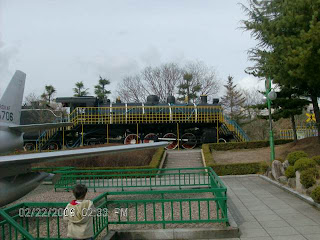
Classmates and community members Marlene, 72, and Nancy, 79, share their memories of trains.

Tell your story! Contact elizabethanne.kim(a)gmail(.)com if you would like to share your story here or if you'd like to bring a Share a Pair event to your neighborhood.
toy train
Tell your story! Contact elizabethanne.kim(a)gmail(.)com if you would like to share your story here or if you'd like to bring a Share a Pair event to your neighborhood.
Sights and Sounds: 1958 to 1961 - Marlene, 72
During my three years of nurse's training, I went home to New Castle almost every weekend. I loved the train travel from the P and LE station downtown. First it was the twenty-five cent bus ride into town from the nurse's home in Bloomfield, then a ten cent ride on the streetcar to the train station that seemed the size of a football field. The huge thick walnut doors, long hard wooden benches, and dirty white tile, littered floor was not a pretty sight. The high ceiling windows were all painted black, a leftover from the war.
After buying my five dollar ticket, I would quickly board the train and find an empty seat. I loved to look around at all of the different passengers. Some were workers with their briefcases; others were shoppers carrying packages. The train was always full of interesting people. Once in a while, if I had any extra money, I would go into the dining car for a special treat. I felt so important to sit at a white linen table with fresh flowers and enjoy a cup of coffee and a pastry served on pretty china. This would set me back fifty cents.
Soon the conductor would start shouting out the different stops—first was Beaver, followed by Beaver Falls, Wampum, and finally New Castle. I thought about all of the workers on the train and how they were so lucky to use this commuter every day to work in Pittsburgh.
Unfortunately, the train station closed one day, and that was the end of the train commuters. The station is still impressive as an upscale restaurant called the Grand Concourse. The black paint has been removed from the ceiling windows, brightening the original white tile floor, and all of the massive wooden doors have remained intact. I marvel at the transformation of the old train station, and at the same time I feel a loss for an efficient form of transportation that benefited a multitude of commuters.
Tracking Childhood Memories - Nancy, 79
What is it about trains that makes them special in my memory?
When I was a child, we always had a train track running underneath the
Christmas tree. Even after my parents divorced, my mom had to buy a Lionel “O”
gauge train to occupy the space under the tree. When Walt and I had our own
family, we were given that train. Our oldest daughter, Diane, still has that
train. It is a replica of the trains of my childhood.
There is something about the resonating sound of a train
whistle that invokes feelings of nostalgia in me. Whether it’s the memory of
the haunting steam whistle of days gone by or the mournful echo of today’s
diesel horns, the sound never fails to reignite childhood memories and take me
back to a simpler time.
Pre-World War II, trains were not only America’s main method of
shipping goods from one part of the country to another, but the most popular
mode of transportation. Not only the
cities, but almost every little town had a railway depot where passengers could
embark on journeys to visit relatives, do some sightseeing, or travel to the
city to conduct business.
Several of my childhood memories involve trains. When I was a
young child of five years, my mother, grandmother, my two brothers and I rode
the train to visit Gram’s relatives in Milroy, PA. Standing impatiently on the
platform as we waited for our train, we finally felt the rumble as the iron horse approached. Mom and Grandma
made sure we stayed back as the train slowly came to a halt, exhaling its steam
as the brakeman finally brought it to a stop. I was excited to board the train and choose my
seat. The mohair-covered seat backs could be moved forward and backward,
enabling passengers to sit facing one another if they wished. I was fascinated
by the dining cars where we sat down and ate a meal as if we were in a
restaurant. The clickety-clack of the train’s wheels on the steel track
provided a constant rhythmic accompaniment as we traveled. After we reached our
destination I recall lying in bed at Gram’s cousin’s house, listening to the
mournful train whistle as it reverberated through the dark night. Hearing that
sound initiated dreams of travel to other places that linger today.
On one of my trips to my Uncle Bob’s summer cottage on Lake
Erie’s Van Buren Bay, New York, he drove us to a local train crossing to see
the 20th Century Limited as
it raced through the night on its way from Grand Central Terminal in New York
City to LaSalle St. Station in Chicago. Uncle
Bob knew when it would come through his area, so we waited at the crossing to
see the streamlined train as it traveled west. Although still steam-powered,
the engine didn’t look anything like the locomotives I was accustomed to
seeing. Watching this silver bullet
as it traveled through the night provided me with an amazing memory.
"Beginning on June 15, 1938, when it
got streamlined equipment, it made the 960-mile journey in 16 hours, departing
New York City westbound at 6:00 P.M. Easter Time and arriving at Chicago’s
LaSalle St. Station the following morning at 9:00 A.M. Central Time, averaging
60 miles per hour." (From Wikipedia)
When I was eight years old, my mother took me on the train to
visit my Aunt Helen and Uncle Bob Stewart in East Orange, New Jersey. Although
I found the mohair-covered seats quite scratchy and rough, I forgot all about
my discomfort once we were underway. It was fascinating to watch the train’s
passage through the country side and its stops at stations along the way. The highlight
of my trip was traveling on Horseshoe Curve outside of Altoona, PA. Sitting
with my nose pressed against the window, I was so excited I could hardly sit
still. Thrilled and impressed by what I saw and bouncing in my seat I appealed
to my mother to share in my enthusiasm. What a sight! Because we were seated
near the middle of the train, we could see both the locomotive and the caboose
at the same time. I recall counting the cars I was able to see from my seat;
there were freight, coal, and passenger cars creating a necklace traveling
around the track built into the mountain. The entire experience provided an
unforgettable memory.
During my high school years, my friends and I were part of
the loyal entourage traveling by train to such “foreign” destinations as
Latrobe, Turtle Creek, McKeesport, Swissvale, and Greensburg to cheer on our
Wilkinsburg Tigers’ football team. Buying a game ticket included train fare.
Those were special train rides, with the high school marching band and
cheerleaders accompanying the fans on the train. It was controlled mayhem as
the band played the school fight song and the cheerleaders incited us to boost
our team with our loudly vocal backing. I can’t help but wonder whether people
in the towns where we traveled could hear us.
Although I have not traveled by train for many years, I still
embrace the memories, and recall the reminiscence of train trips and childhood
dreams.
Subscribe to:
Posts (Atom)